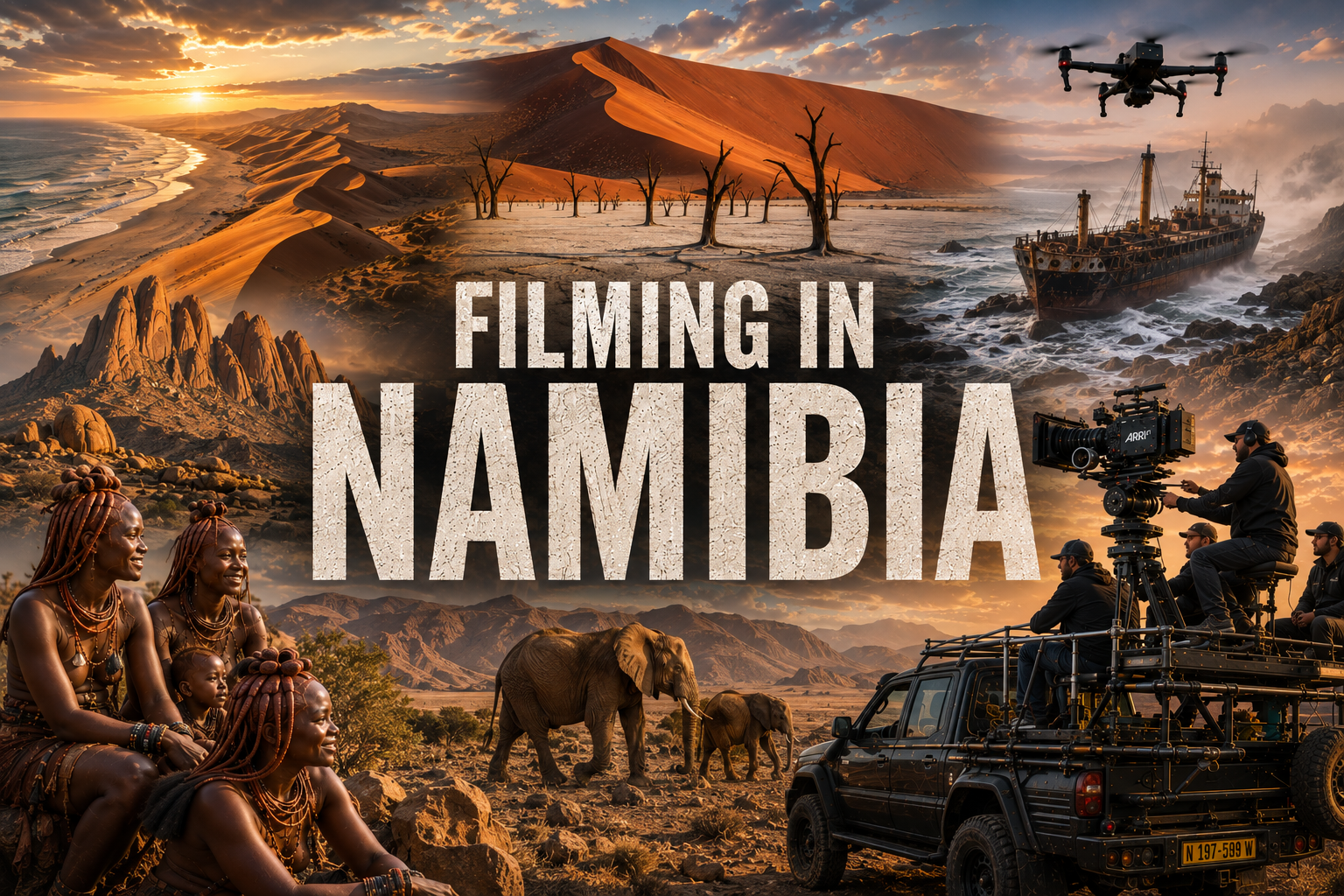
Namibia is where you go when the script calls for the biggest, emptiest, most cinematic landscape on Earth — dunes that glow orange at dawn, a shipwrecked coast wrapped in fog, gravel plains that read as another planet. Getting a crew and a camera into that country — the real challenge of filming in Namibia — and shooting it safely is the hard part. That is where a local film crew in Namibia and an experienced fixer earn their keep. African Fixer has crewed and fixed shoots across Africa since 2005; here is how we put a Namibia production on its feet — crew, kit, permits and logistics — so you shoot the epic and skip the drama.
Quick answer: getting a film crew in Namibia
Booking a film crew in Namibia means access to a small but seasoned local crew base, desert-capable kit and vehicles, and the permits and logistics that make remote shoots possible. Filming requires permission from the Namibia Film Commission, and international productions must work through a locally registered production company — that is us. African Fixer supplies crew, camera, grip, lighting and drone kit, 4×4 units, permits, transport, accommodation and full duty-of-care, so filming in Namibia — even hundreds of kilometres from the nearest town — runs like an expedition, not a gamble.
Why Namibia, and why now
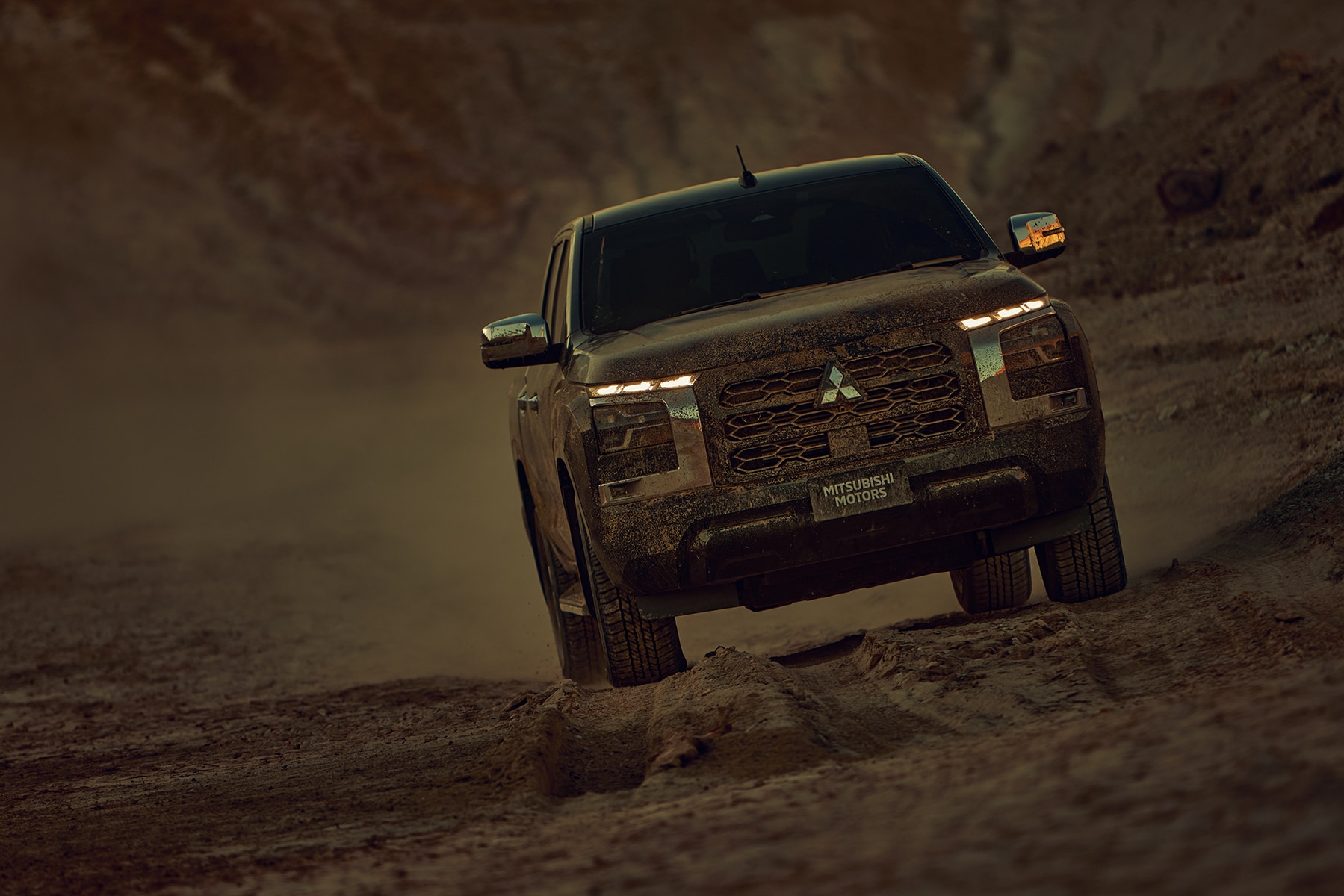
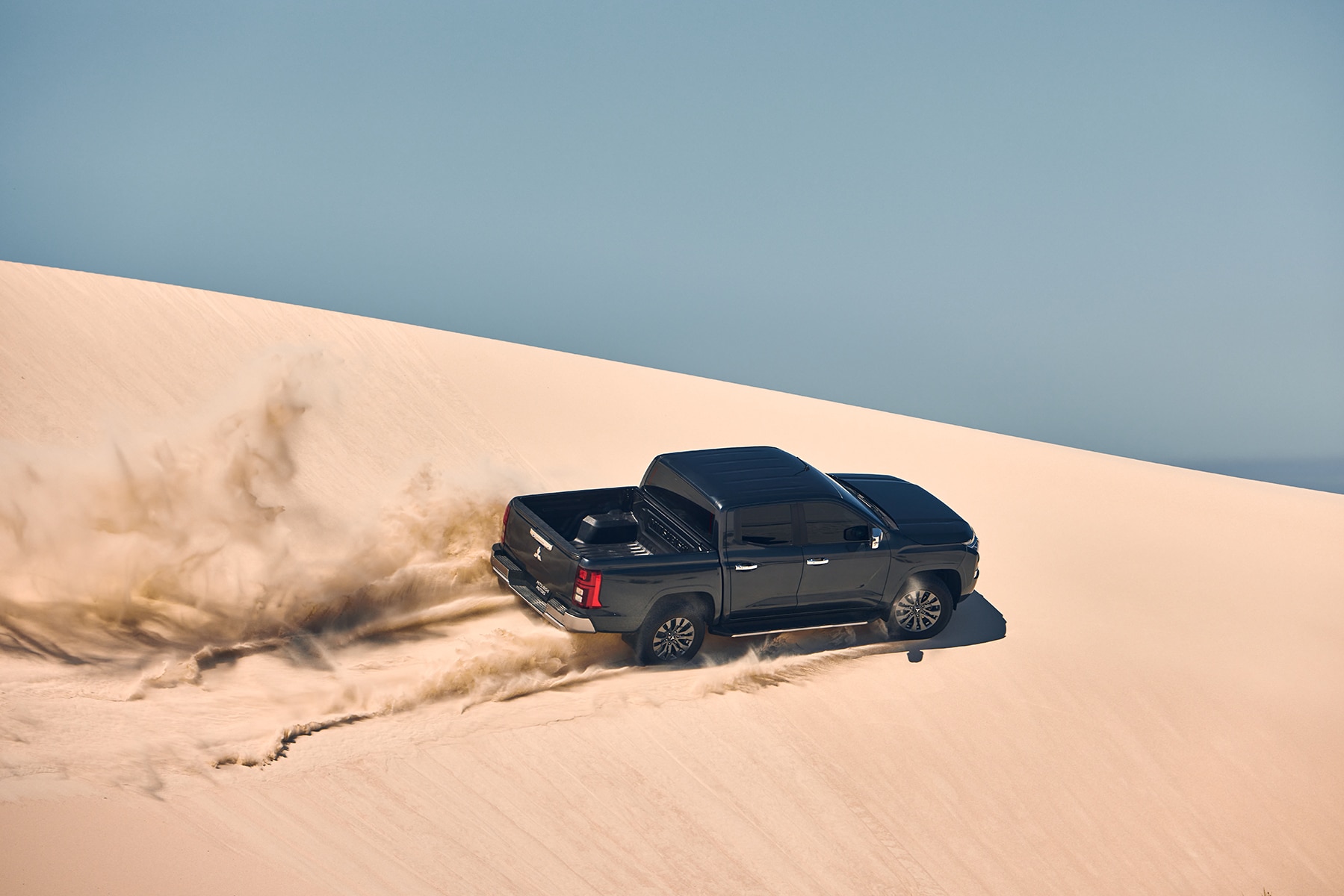
Namibia has quietly become one of the continent’s most in-demand locations for features, car commercials, fashion, stills and natural history. The reasons are simple: unmatched desert and otherworldly scenery, clear skies for most of the year, low population and traffic, a stable and safe operating environment, and an experienced local crew base used to servicing international productions. For anything that needs raw scale — post-apocalyptic worlds, automotive hero plates, epic wides — filming in Namibia delivers looks you cannot fake on a stage.
What African Fixer handles in Namibia
We are fixer and line producer combined. On a Namibia shoot we provide and coordinate:
- Local film crew — experienced HODs and support crew (camera assist, grip, electric, art, production), scaled to your shoot, plus management of any international crew you bring in.
- Camera, grip, lighting and drone kit — sourced locally where available, imported and carnet-cleared where not.
- Filming permits and location access — through the Namibia Film Commission and with private landowners, conservancies and park authorities.
- Locations — scouting and access across the Namib, the coast and the north.
- Specialist units — desert-capable 4×4 fleets, low-loaders and tracking vehicles, water trucks, marine and aerial units.
- Logistics — remote-location transport, fuel, accommodation, catering and cast/client care in the middle of nowhere.
- Visas, work permits and customs — for crew and equipment.
- Safety and duty of care — desert medics, water and vehicle safety, comms and evacuation planning.
Permits for filming in Namibia
Filming in Namibia requires official permission from the Namibia Film Commission (NFC), and a key rule for international productions: you must work with a locally registered production company. The application typically needs your script or synopsis, shooting schedule, production budget and details of any special effects or special requirements, along with the NFC administrative fee (currently N$500).
- Apply well in advance. The NFC asks for the General Film Permit application at least three weeks before arrival; we recommend contacting us four to six weeks ahead, and earlier for remote locations, protected areas or complex shoots.
- Protected areas and national parks — Namib-Naukluft, Skeleton Coast and Etosha require additional permits and park fees, which we confirm and arrange per shoot.
- Drones must comply with the Namibia Civil Aviation Authority (NCAA) — permits and airspace rules apply, and we secure them.
- Filming with communities (Himba, San and others) requires consent, cultural sensitivity and fair arrangements — we handle this respectfully and correctly.
- Foreign crew generally need the appropriate work permits and visas; we advise and arrange based on your crew list and dates.
Best time for filming in Namibia
- May to October — the dry season. This is the prime window for filming in Namibia. Clear skies, minimal rain, mild days, cool nights, excellent visibility and the best light on the dunes. Wildlife concentrates around waterholes, which helps natural-history and safari-look shoots.
- June to August at Sossusvlei gives you virtually no rain and crisp, high-contrast dune light.
- November to March — the green/wet season brings heat, humidity and afternoon thunderstorms inland. It is shootable with planning, and the light can be dramatic, but build in weather cover.
- Skeleton Coast fog is a signature look and a scheduling factor — morning fog is common, and we plan call times around it.
Top locations for filming in Namibia
- Sossusvlei & Deadvlei — the towering rust-red dunes and the white clay pan with black petrified trees; Namibia’s signature, unmistakable hero location.
- Skeleton Coast — shipwrecks, fog, seal colonies and a raw Atlantic edge for haunting, end-of-the-world imagery.
- Namib-Naukluft & the gravel plains — Mars-like emptiness for sci-fi and automotive.
- Swakopmund & Walvis Bay — a coastal town with German-colonial architecture, plus lagoon, flamingos and a service base with hotels and infrastructure.
- Spitzkoppe — dramatic granite peaks (the “Matterhorn of Namibia”) and ancient rock art.
- Etosha & the north — salt pan and wildlife; Kaokoland and Damaraland for desert elephants, rugged terrain and Himba culture.
Crews, kit and desert logistics
Namibia’s local crew base is small but seasoned — the same teams that service international features and global car campaigns. We build your crew from that pool and supplement with regional specialists where a shoot needs them. Kit not available in-country is imported under carnet and cleared by us. The real craft of filming in Namibia is logistics: shooting hundreds of kilometres from the nearest town means fuel, water, vehicle recovery, comms, catering and accommodation all have to be planned like an expedition. That is exactly the kind of zero-drama operation we have run for two decades. Many Namibia shoots also crew and fly through South Africa, so it pairs naturally with a Cape Town base.
Safety and duty of care
Namibia is safe and stable, but the real risk of filming in Namibia is the environment: heat, remoteness, long transfers and desert driving. We manage it with desert-experienced medics, vehicle and water-safety protocols, satellite comms in dead zones, and clear evacuation planning — plus clean duty-of-care documentation for your production and insurers.
Why African Fixer
Twenty-one years fixing shoots across Africa, trusted by global productions — including Nike (worldwide football commercials), Coke Studio North Africa and DSV (logistics commercials shot across multiple African countries). Local teams, born and bred on this continent — not fly-in guesswork. In a country where the nearest backup can be six hours away, that experience is the difference between a shoot that delivers and one that stalls. If you are weighing options across the continent, see why global productions choose Africa, or compare desert Namibia with island Mauritius.
Ready to shoot Namibia?
Send us your dates, script and locations wishlist and we will come back with a crew plan, a locations pack, a permit timeline and a budget. Filming in Namibia rewards early planning — the sooner we start, the smoother the shoot. Request a callback or send your brief and we will reply fast.
Film crew in Namibia: frequently asked questions
Do I need a permit to film in Namibia?
Yes. Filming requires permission from the Namibia Film Commission, and international productions must work with a locally registered production company. We prepare and submit the application — script, schedule, budget and special requirements — and secure location and park access.
Can you provide a full local film crew in Namibia?
Yes. We supply experienced local HODs and support crew scaled to your shoot, manage any international crew you fly in, and source or import camera, grip, lighting and drone kit.
When is the best time to film in Namibia?
May to October — the dry season — offers clear skies, mild days and the best light on the dunes, especially June to August at Sossusvlei. November to March is hotter and wetter with afternoon storms inland, so plan weather cover.
How far in advance should I book a Namibia shoot?
The Namibia Film Commission asks for permit applications at least three weeks before arrival. Contact us four to six weeks ahead for standard permits and visas, and earlier for remote locations, protected areas or large crews. Faster turnarounds are possible.
Can you handle drones and filming in national parks?
Yes. Drones must comply with Namibia Civil Aviation Authority rules, and parks like Namib-Naukluft, Skeleton Coast and Etosha need additional permits and fees. We arrange all of it.