Quick answer: Filming in Botswana requires permits secured in advance — especially for national parks, game reserves, and protected areas like the Okavango Delta and Chobe National Park. Productions also need 4×4 transport, charter flights to bush airstrips, experienced wildlife guides, and customs clearance for imported equipment. African Fixer provides end-to-end Production Support Botswana, handling permits, local crew, transport, scouting, equipment, and on-set safety so international teams can film efficiently across the country’s remote environments.
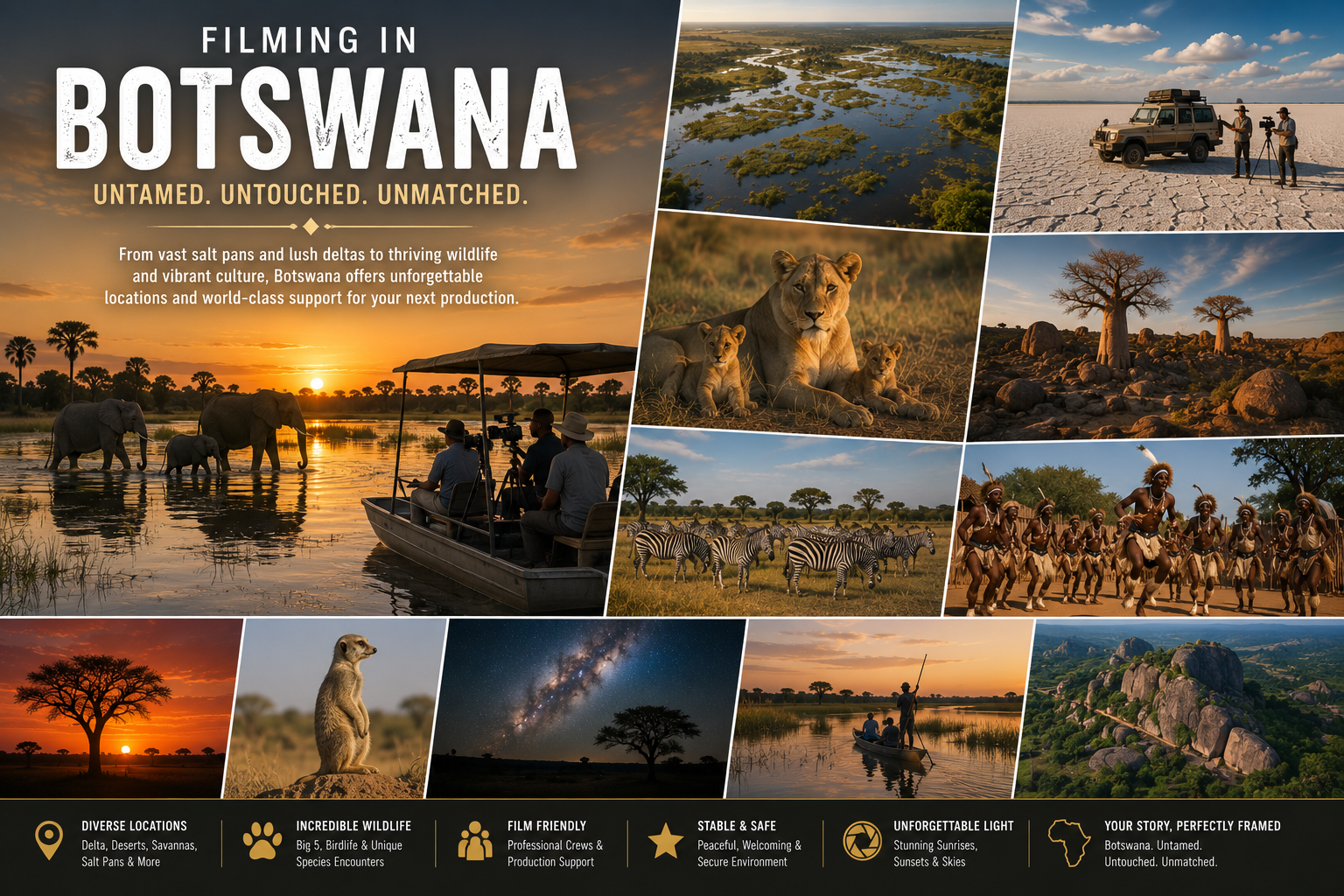
Botswana holds some of the most untouched natural environments on the African continent. The Okavango Delta, the Makgadikgadi salt pans, the Chobe riverfront, and the vast Kalahari give international productions a visual range few destinations can match. They are also remote, low-infrastructure, conservation-sensitive environments that demand disciplined planning. Production Support Botswana provides the operational framework that lets filming move safely and efficiently from city to delta to desert.
As experienced film fixers in Botswana, African Fixer delivers on-the-ground coordination — permits, crew, transport, scouting, equipment, and secure movement across long distances and protected areas.
What does a film fixer in Botswana do?
A film fixer in Botswana is a local line producer who coordinates every operational element of a shoot so an international crew can focus on the creative. In practice this covers seven core areas:
- Film permits and authorisations — securing approvals to film in national parks, reserves, and public spaces before the crew arrives.
- Local crew and heads of department — sourcing and vetting guides, fixers, and HODs experienced in remote and wildlife conditions.
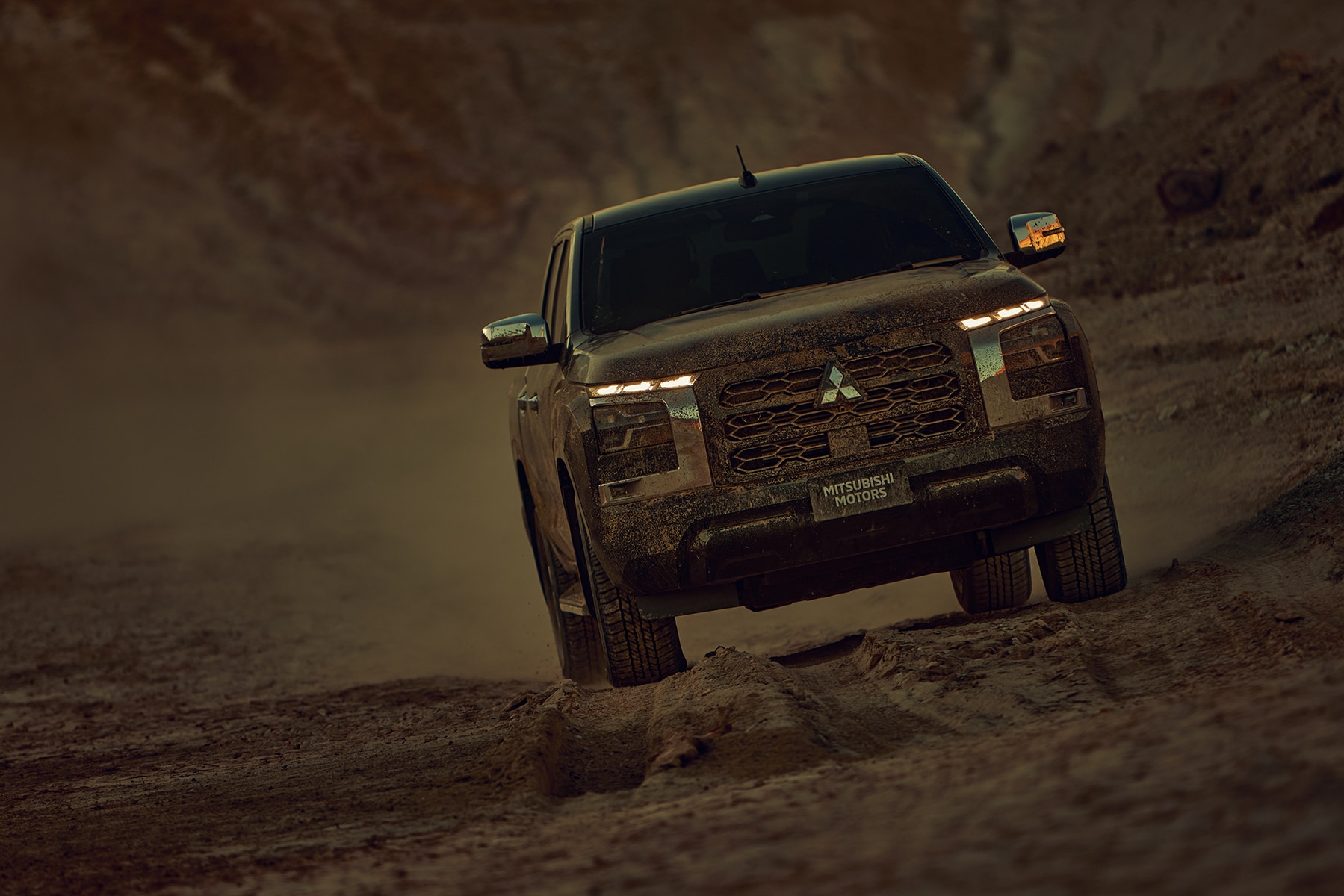
- Transport and logistics — 4×4 vehicles, charter flights to delta and bush airstrips, fuel planning, and movement between Gaborone, Maun, Kasane, and remote sites.
- Equipment and shipping — hiring gear regionally or clearing imported equipment through customs and carnets.
- Location scouting — matching locations to the creative brief, season, and budget, including sites beyond the headline destinations.
- Accommodation, catering, and travel — lodges, remote camps, dietary requirements, and full-unit travel coordination.
- Security and safety — wildlife-area risk management, experienced guides, and secure movement throughout production.
Do you need a permit to film in Botswana?
Yes. Filming in Botswana — particularly inside national parks, game reserves, and protected areas — requires the correct permits and clearances arranged in advance through the relevant authorities. Permits should be in place before crews arrive rather than negotiated on location. A local fixer manages the applications, liaises with authorities, and ensures documentation is correct for the specific locations, equipment (including drones), and shoot type involved.
Best filming locations in Botswana
| Location | What it offers | Best for |
|---|---|---|
| Okavango Delta (UNESCO World Heritage Site) | One of the planet’s largest inland deltas — channels, floodplains, and concentrated wildlife | Wildlife, documentary, aerials |
| Makgadikgadi Pans | Among the largest salt flats on earth; stark, otherworldly horizons | Commercials, sci-fi, fashion |
| Chobe National Park | A working riverfront with dense elephant populations | Wildlife, factual content |
| Central Kalahari | Vast desert and open skies | Adventure, expansive landscapes |
| Tsodilo Hills (UNESCO World Heritage Site) | Thousands of ancient rock-art paintings | Cultural, heritage, documentary |
For documentaries, commercials, and feature work, that diversity is a major asset. Operationally, it means productions are often working far from major centres, where logistics make or break the schedule.
When is the best time to film in Botswana?
Botswana’s filming conditions are strongly seasonal. The dry season (roughly May to October) concentrates wildlife around water and generally offers more reliable access. The green season (roughly November to April) transforms the landscape with dramatic skies but brings rain and changeable road conditions. The Okavango Delta’s flood cycle adds a further layer — water levels shift the geography of what is shootable and how it is reached. Scheduling around these realities is one of the first things African Fixer plans with clients.
Why choose Production Support Botswana from African Fixer?
Botswana rewards productions that come prepared. The country is known for a stable operating environment and a strong conservation ethic, and its landscapes carry genuine cinematic weight. The opportunity is real, and so is the operational complexity of filming across protected, remote, and infrastructure-light environments. With the right planning, Botswana becomes one of the most rewarding places to film in Africa.
Frequently asked questions
Can you fly a drone in Botswana for filming?
Drone filming is possible but regulated, and requires specific authorisation — particularly near wildlife, protected areas, and airspace. A fixer arranges the necessary clearances and on-the-ground operator support in advance.
How do international crews bring equipment into Botswana?
Equipment is either hired within the region or shipped and cleared through customs using a carnet. A local fixer manages clearance so gear is not delayed at the border.
Which towns are the main production bases?
Gaborone (the capital), Maun (gateway to the Okavango Delta), and Kasane (near Chobe National Park) are the principal bases for crew, transport, and charter flights.
Is Botswana safe for film production?
Botswana is widely regarded as one of Africa’s more stable filming environments. The main operational risks are wildlife and remote-area logistics, which are managed through experienced guides and structured safety planning. This stability makes Production Support Botswana straightforward to plan and budget.
Work with film fixers who know Botswana
African Fixer provides full Production Support Botswana — structured logistics, local expertise, and reliable coordination from pre-production through wrap. Learn more about the country’s flagship location via the Okavango Delta UNESCO World Heritage listing.
Planning a shoot in Botswana? Contact African Fixer to start building your production.
Frequently Asked Questions
Do I need a permit to film in Botswana?
Yes. Commercial film, video and photography shoots in Botswana require permits, and African Fixer secures the necessary approvals on your behalf.
Can African Fixer provide crew and equipment in Botswana?
Yes — vetted local crew, heads of department, camera and lighting hire, vehicles and full logistics in Botswana, with international shipping backup when required.
Why use a local fixer in Botswana?
A local fixer is your single accountable point of contact in Botswana for permits, customs carnets, locations, transport, accommodation and on-the-ground problem-solving.
Importing film, broadcast and photographic equipment is handled with an ATA Carnet for temporary admission. African Fixer manages carnet processing, customs clearance and equipment logistics as part of full production support.