
Niger
Why Film in niger?
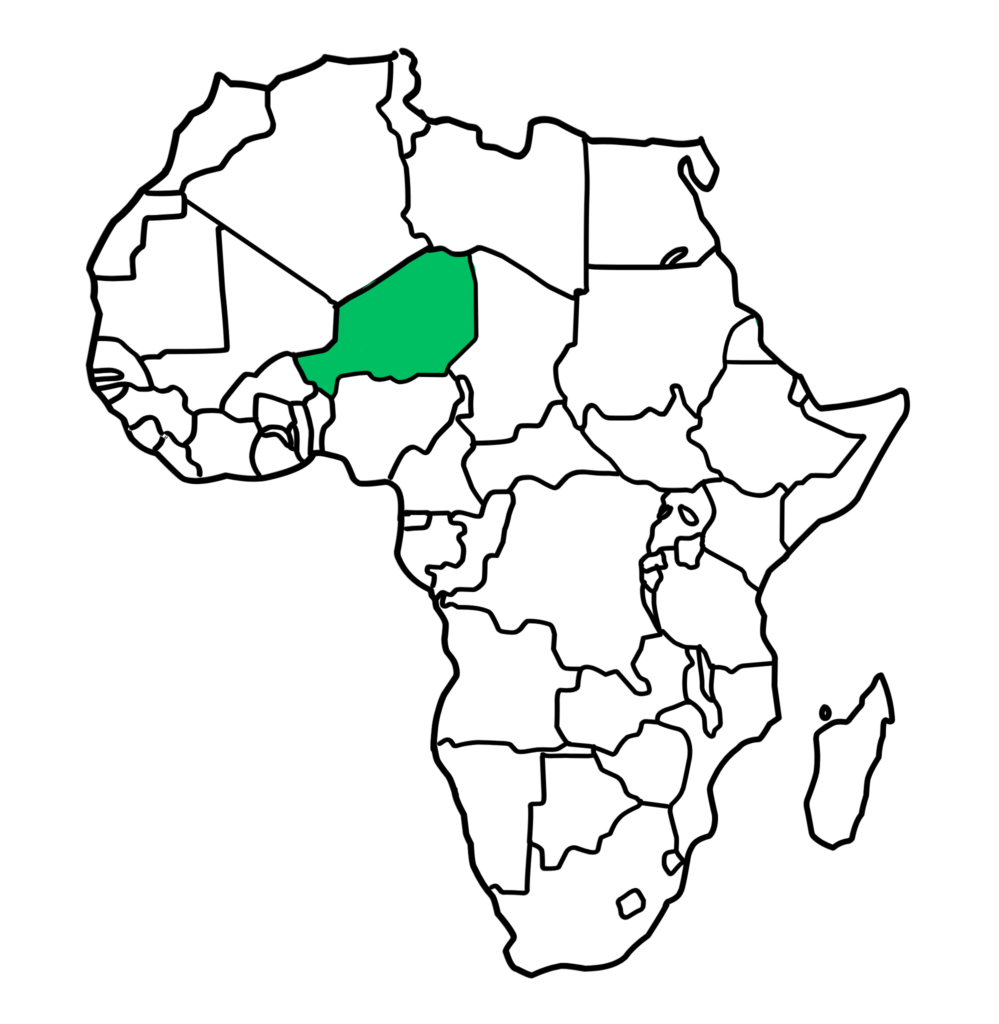
Niger offers some of the Sahara’s most spectacular and remote landscapes – the Aïr Mountains, the Ténéré dunes and the caravan city of Agadez – alongside the Niger River and the last West African giraffes, but much of the country is affected by insecurity, so productions must be planned with exceptional care.
- Agadez – the UNESCO mud minaret and Sahara gateway
- The Aïr Mountains and Ténéré Desert
- The last West African giraffes at Kouré
- The Niger River at Niamey
- The legendary Bilma salt caravans
- Sudano-Sahelian mud architecture
- Tuareg desert culture
- Handled responsibly, with careful safety assessment
-
Capital City
Niamey
-
Main Cities
Niamey, Zinder, Maradi and Agadez
-
Main Languages
French (official); Hausa and others
-
Currency
West African CFA franc (XOF)
-
Weather
Niger experiences a hot climate with consistently high temperatures throughout the year. The country has a long, intense dry season from October to May, followed by a short and unpredictable rainy season influenced by the West African monsoon. Since filming conditions are more stable during the dry season, it is generally the best time to shoot.
-
Climate
Sahel to Saharan – very hot and dry
-
Best time to shoot
November to February (cooler dry season)
-
Main Production Hubs
Niamey
Production Services
Our Niger production services include:
- Local Producers
- Film Fixers
- Production Management
- Film, Video & Stills Crew
- Camera Equipment
- Lighting & Grip
- Drone Operators
- Location Scouting
- Film Permits
- Casting
- Transport & Logistics
- Crew & Cast Accommodation
- Security
- Catering
Crew & Equipment
Niger suits documentary and specialist productions, subject to a careful assessment of feasibility and safety in the current environment.
Local fixers, guides and crew can support where conditions allow; senior technical crew and specialist equipment are generally brought in from abroad.
Productions must plan around significant security and logistical challenges, building in flexibility, contingency and specialist advice.
Top Filming Locations
-
Ténéré Desert dunes
Classic Sahara sand sea (security permitting).
-
Niamey & the Niger River
The riverside capital.
-
Agadez (UNESCO)
A mud Grand Mosque and Sahara gateway.
-
W National Park
Savanna wildlife (security permitting).
-
Zinder old town & sultan's palace
Historic Hausa heritage.
-
The Aïr Mountains
Volcanic desert massifs (security permitting).
-
Kouré giraffes
The last West African giraffes.
-
Grand Marché, Niamey
The central market.
-
Bilma & the salt caravans
Timeless desert trade (security permitting).
-
Tuareg culture & camel trains
Desert nomad life.
-
Gadoufaoua fossil fields
Dinosaur remains in the desert.
-
The Termit Massif
Remote desert mountains.
-
Sudano-Sahelian mud architecture
Iconic earthen buildings.
-
Sahara dunes & ergs
Seas of sand.
-
Oases & palm groves
Green desert refuges.
-
Sahel villages & millet fields
Rural dry-country life.
-
Traditional festivals (Cure Salée)
Nomad gatherings.
-
Niger River pirogues
River transport and fishing.
-
Camel caravans
Traditional desert trade.
-
Vast Saharan wilderness
Immense, empty desert.
Hotel Options
Where a project is feasible, Niger’s Niamey hotels serve as bases. Access for filming is subject to approval, availability and a careful safety assessment.
- Radisson Blu Hotel, Niamey – Modern riverside hotel.
- Noom Hotel Niamey – Contemporary city hotel.
- Soluxe Hotel Niamey – Established city base.
- Grand Hôtel du Niger – Riverside landmark.
- Agadez auberges (security-dependent) – Desert-gateway bases where feasible.
- Guesthouses & camps – Local accommodation where feasible.
Crew & Cast Accommodation
Where a shoot is feasible, cast and crew accommodation is available in Niamey. All arrangements are subject to the safety assessment.
- Luxury (talent, directors, key clients)
Radisson Blu / Noom, Niamey – City bases for talent and clients where feasible. - Mid-range (main crew, production team)
Niamey: Soluxe and Grand Hôtel du Niger – Reliable capital bases. - Budget & serviced options (extended crew, longer shoots)
Niamey guesthouses – Value options where available.
Regional guesthouses and camps – Practical bases where shooting proceeds.
Accommodation availability and rates vary by season and should be booked well in advance. African Fixer manages crew and cast bookings, transfers and per-location logistics as part of production support.
Best Time to Shoot
- November to February – The cooler dry season and the most workable window.
- The giraffes at Kouré can be seen year-round near Niamey.
- March to May is extremely hot.
- June to September is the short rainy season.
Visa Requirements
International cast and crew should confirm visa and work permission requirements before travelling. Typical documents may include a valid passport, flight details, accommodation details, invitation letter, crew list and equipment list.
-
Required Documentation
To complete the visa process, applicants must submit an extra passport-sized photo, a valid international passport, an official invitation letter, and a synopsis of the production project. Additionally, a mission order from the production company must confirm the crew member’s purpose of visit. Flight and hotel booking confirmations are also required.
-
Timings & Cost
The visa processing time usually ranges from five to ten working days. The fee is $200, payable in person at the embassy.
-
Vaccination Requirements
Travelers must provide an international vaccination certificate. Depending on the latest health guidelines, a negative PCR test may also be necessary.
International Crew Accreditation
International productions may require local coordination, film permissions and supporting letters depending on the production type, locations and crew nationality, and should work with an in-country fixer or service company.
-
Required Documentation
Each crew member must submit a valid international passport, a project synopsis, filming location details, the duration of the project, a complete equipment list, and broadcaster information.
-
Timings & Cost
The accreditation process typically takes between two and five working days. The standard fee is $500 per crew member. However, for event-specific accreditation, costs and approval timelines depend on the event organizer.
General Film Permit
Filming permits are arranged through the relevant authorities, with heritage and protected-area permissions where the security situation allows. In much of the country, access and movement are constrained, so productions must work through experienced local fixers with generous lead time and specialist security advice.
-
Required Documentation
Filmmakers must submit international passports for all crew members, professional identification cards, a project synopsis, a complete crew list, and valid visas for international crew members.
-
Timings & Cost
Applications usually take two to four working days for approval. The general film permit fee is $1,500.
Drone Permit
Drone use is restricted and requires authorisation, with sensitivity across much of the country. Any drone filming must be arranged well in advance, and approval is not guaranteed.
-
Importation Regulations
Importing drones into Niger requires prior authorization from the Aviation Department.
-
Required Documentation
There is no formal application process for local drone operations. Instead, arrangements are made through verbal negotiations with the security post. A commanding officer will assign an officer to oversee the drone team and ensure filming proceeds without disruptions.
-
Issuing Authority
No single organization is responsible for issuing drone permits. Instead, negotiations take place with the security post in the desired filming area.
-
Timings & Cost
Securing drone filming approval typically takes three to four weeks. The cost depends on the security personnel on duty and is determined through direct negotiation.
Equipment Customs Clearance
Professional equipment can usually be temporarily imported with the correct customs documentation. An ATA Carnet may be used where applicable, and equipment lists should be prepared in advance.
-
Clearance Process
Productions bringing in substantial equipment must place a fixed bond deposit based on the equipment’s value.
-
Required Documentation
Filmmakers must submit a detailed list of equipment, ensuring all serial numbers are clearly referenced.
-
Issuing Authority
The customs officer at the Niger airport handles clearance approvals.
-
Timings & Cost
Customs clearance typically takes between two and five working days. The cost varies depending on the total value of the imported equipment.
Safety and Security
Important: Niger is affected by a serious insecurity from jihadist groups and a significant kidnapping risk, and following the 2023 change of government much of the country is under “do not travel” advisories. African Fixer assesses every project’s safety, feasibility and insurance carefully, and will only proceed where a shoot can be carried out responsibly.
Rebates & Incentives
Niger does not operate a film cash rebate or incentive scheme for international productions.
The central considerations are feasibility and safety rather than incentives. African Fixer will provide an honest assessment before any commitment, and manage permits and logistics only where responsible.
Frequently Asked Questions
Yes. Permits are arranged through the relevant authorities, with additional permissions for protected and heritage areas. Work through a local fixer and allow lead time.
Niger has local fixers and guides, and crew can be engaged where conditions allow, with technical crew brought in from abroad.
Agadez, the Aïr Mountains and Ténéré Desert, the Kouré giraffes and the Niger River – access permitting.
City hotels in Niamey, where a shoot proceeds.
Yes, with the correct customs paperwork; an ATA Carnet may be used. Plan to import camera, drone and specialist packages.
Yes. Drone filming requires civil-aviation authorisation, with restrictions near sensitive sites and protected areas.
No. Niger offers no film rebate, and safety and feasibility are the priority considerations.
Its Saharan landscapes are spectacular, but the current security situation means feasibility and safety must be assessed case by case.
Yes. We provide full production support from planning through to wrap, including permits and logistics.
Did you know?
Just outside Niamey at Kouré roams the last wild herd of West African giraffes – a distinct, pale subspecies brought back from the brink of extinction – while the mud minaret of Agadez has risen over the Sahara for some 500 years.
PRO TIP:
Lead with feasibility: before any scouting or scheduling, obtain an honest, current safety assessment – much of Niger is under severe advisories, though the Kouré giraffes near Niamey may be workable with careful planning.