

African Fixer provides full film, video and stills production services across Algeria — Africa’s largest country — from the sandstone forests and rock art of Tassili n’Ajjer and the volcanic Hoggar Mountains to the Roman ruins of Timgad and Djémila, the Casbah of Algiers and the red oasis towns of the Sahara. We manage producers, fixers, crew, permits, desert logistics and crew accommodation, planned region by region.
African Fixer connects international production companies, agencies, brands, broadcasters and photographers with trusted local producers, fixers and crew across Algeria. We support TV commercials, documentaries, feature films, branded content, corporate videos, music videos and still photography campaigns with experienced local teams and reliable on-the-ground production support.
Algeria is a vast country of two worlds, a Mediterranean north of Roman ruins and colonial cities, and one of the greatest expanses of the Sahara on Earth, with rock-art massifs, volcanic peaks and red oasis towns, exceptional, under-filmed material.
Our Algeria production services include:
Algeria suits documentary, travel, heritage and commercial productions, with local fixers and authorised Saharan operators experienced in desert logistics.
A local crew base of producers, fixers, drivers and production assistants is available in Algiers. Senior technical crew and specialist equipment are generally brought in from abroad or Europe.
Productions plan for authorised desert guides, 4×4 convoys and camps in the Sahara, and typically import camera, drone and specialist packages.
Algeria boasts a variety of stunning locations, ranging from bustling urban centers to remote desert landscapes. If you’re looking for historic architecture, dramatic natural backdrops, or vibrant cultural settings, Algeria has it all. Furthermore, the country offers a wealth of visually striking options for filmmakers. Not only does it provide diverse scenery, but it also offers a unique cultural atmosphere that enhances any production.
Explore the capital's historic Casbah, modern cityscapes, and scenic coastal areas.
Capture the mesmerising beauty of vast dunes and ancient desert towns like Ghardaia.
Known for its well-preserved historical sites, the city offers a glimpse into Algeria's rich past.
These rugged peaks provide striking backdrops for epic productions.
Discover a city perched on dramatic cliffs with a unique blend of history and modernity.
Sandstone forests and ancient rock art
Volcanic desert peaks
The Sahara's southern hub
Red oasis town and dunes
Fortified desert towns
A remarkably complete Roman city
A Roman city in the hills
Roman ruins on the coast
A Sahara oasis and gateway to Tassili
Immense sand seas
Ports and beaches
Fortified villages
Berber highlands
Distinct desert and mountain peoples
The heart of the desert
Algeria’s city hotels and Sahara camps serve as bases for productions. Access for filming is subject to approval and availability.
Cast and crew accommodation is strongest in Algiers, with oasis hotels and desert camps in the Sahara. We arrange group bookings, authorised guides and desert logistics.
Luxury — Talent, Directors & Key Clients
Sofitel Algiers / Sheraton Club des Pins — Premium city bases for talent and clients.
Mid-Range — Main Crew & Production Team
Algiers: El Aurassi and city hotels — Reliable capital bases.
Tamanrasset & Djanet: Sahara-gateway hotels — Desert bases.
Ghardaïa & Timimoun: oasis hotels — Comfortable desert-town bases.
Budget — Extended Crew & Longer Shoots
City business hotels and guesthouses — Value options for larger crews.
Desert camps and auberges — Practical bases for Sahara shoots.
International cast and crew should confirm visa and work permission requirements before travelling. Typical documents may include a valid passport, flight details, accommodation details, invitation letter, crew list and equipment list.
For further guidance, please check the following website for detailed information on required documents and application procedures: Visa HQ Algeria.
Visa processing usually takes about four weeks.
Although not mandatory, it’s recommended to have a vaccination certificate or PCR test for travel to Algeria.
International productions may require local coordination, film permissions and supporting letters depending on the production type, locations and crew nationality, and should work with an in-country fixer or service company.
Passport for each crew member, Synopsis of the project, Location and duration of production, List of equipment to be used
The accreditation process takes approximately four weeks.
The cost of accreditation matches the visa fees.
Filming permits are arranged through the relevant authorities, and the process can be bureaucratic, so generous lead time is essential. Sahara travel typically requires authorised operators and, in places, escorts, and some border regions are off-limits. Work through an experienced local partner.
The Algerian Consulate issues temporary press accreditation, which serves as a general film permit. Additionally, the Ministry of Culture may be involved in the process.
Please allow four to eight weeks for the permit to be processed and issued.
Synopsis or treatment of the project, Crew members’ names and job descriptions
There is typically no cost associated with obtaining a general film permit. However, if your project involves filming at a registered heritage site or other special locations, additional fees may apply.
Drone filming requires authorisation and can be restricted, especially near sensitive sites and borders. Permissions should be arranged well in advance.
Importing drones is strictly forbidden.
The Algerian Civil Aviation Authority (CAA) issues drone permits.
Full shoot schedule, Detailed shoot list, African Fixer to advise
Permit issuance timelines vary and are available upon request.
The cost of the permit depends on various factors and is available upon request.
Algeria is a carnet country, requiring a Carnet ATA for the temporary importation of equipment.
To simplify customs clearance, hiring a transit agent familiar with Algerian customs procedures is recommended. The agent assists with the Carnet ATA process and ensures compliance with local regulations.
Carnet ATA
Algerian customs handles the necessary clearance.
The customs clearance process typically takes four to eight weeks.
Transit agent fees, A recoverable guarantee amount paid to customs, which will be refunded before the return flight.
Northern Algeria’s main cities and the established Saharan tourist zones (with authorised operators) are generally safe with standard precautions. Border regions with Mali, Niger and Libya, and some remote areas, are off-limits and carry advisories. Permitting is bureaucratic, and desert logistics require authorised guides, so planning is region by region.
For filming in remote or high-risk areas, such as mountainous or desert regions, general security measures are highly recommended. To ensure the safety of cast and crew, productions may need to hire experienced security personnel or take additional precautions to mitigate risks.
Algeria does not currently operate a formal national film cash rebate for international productions, so budgets should not rely on a rebate.
African Fixer will confirm the latest position on permit fees and any incentives during planning, and manage the permits, authorised Saharan operators and logistics that make Algeria accessible.
Yes. Permits are arranged through the relevant authorities, with additional permissions for protected and heritage areas. Work through a local fixer and allow lead time.
Algeria has local fixers and authorised Saharan operators; senior technical crew and equipment are brought in from abroad.
Tassili n'Ajjer and the Hoggar Sahara, the Roman ruins of Timgad and Djémila, the Algiers Casbah and the M'zab Valley.
City hotels in Algiers and oasis hotels and desert camps in the Sahara.
Yes, with the correct customs paperwork; an ATA Carnet may be used. Plan to import camera, drone and specialist packages.
Yes. Drone use requires authorisation and can be heavily restricted; arrange permissions well in advance.
No. Algeria does not currently offer a film rebate. We confirm permit fees before you budget.
Yes, especially for documentary, heritage and travel work needing epic Sahara and Roman ruins, planned region by region.
Yes, where feasible and responsible. We provide production support and always lead with a feasibility and safety assessment for higher-risk destinations.
Algeria is the largest country in Africa, and over four-fifths of it is Sahara — including Tassili n’Ajjer, whose eroded sandstone forests hold one of the greatest collections of prehistoric rock art on Earth, some of it 12,000 years old.
PRO TIP:
Allow generous lead time for Algeria’s bureaucratic permits, use authorised operators for the Sahara, shoot the desert November to February, and pair the Roman north with a Tassili or Hoggar desert leg.
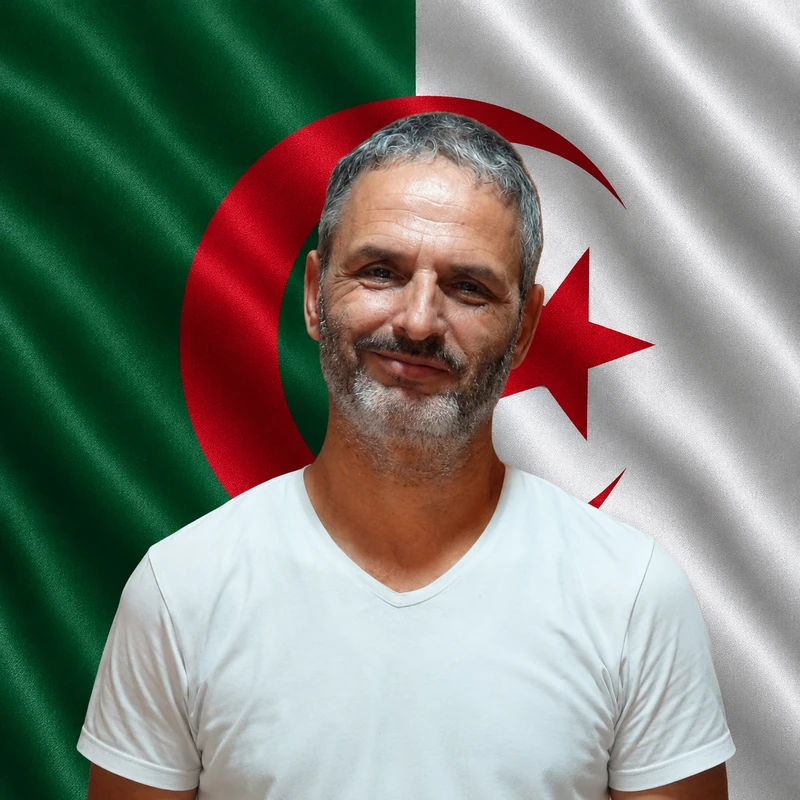
Lakhdari is African Fixer’s trusted local fixer and producer in Algeria, with extensive experience managing film, video and stills productions across the country, from Algiers city shoots to remote Sahara expeditions. He handles permits, crew coordination, desert logistics and all on-the-ground production needs.
Trusted by leading global brands, TV networks and the worlds top film production companies